Lessons and Resources for Black History Month
Beginnings
The promises of the Declaration of Independence for “life, liberty, and the pursuit of happiness” were initially denied the ancestors of many Black Americans, who came to America not as willing immigrants, but as captured slaves. Nonetheless, they endured and resisted, and many escaped slavery to freedom. In the early republic, they made many contributions to the United States as the struggle for liberty and equality had just begun.
Civil War
During the Civil War, the future of the Union and African Americans hung in the balance. One of the fruits of victory was the passage of the so-called Reconstruction Amendments to the U.S. Constitution: the 13th Amendment (abolishing slavery), the 14th Amendment (ensuring due process and equal protection of the laws), and the 15th Amendment (promised Black men the right to vote).
The Era of Legal Segregation
The end of slavery did not yet bring full equality to African Americans. Almost immediately, Southern states began passing laws to oppress Black people. The end of Reconstruction in 1877 spurred even more legislation designed to segregate African Americans and deny them rights enjoyed by white Americans, including voting.
The Civil Rights Movement
The modern civil rights movement in the United States transformed the country from the mid-1950s through the early 1970s. This sprawling movement can be divided into three parts: social activism (protests, demonstrations, and boycotts); the legal struggle for equality in the courts; landmark legislation for civil rights.
Voices of Change
The civil rights movement could trace its roots to a variety of leaders and thinkers from different eras and regions; its successes, in turn, influenced leaders of other movements that would follow it.
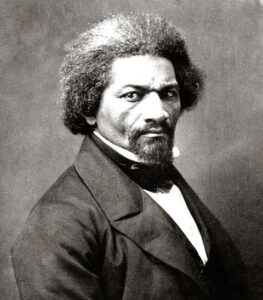
The life of Frederick Douglass, the great African-American statesman, encompassed the most momentous years of his people’s long history in America. He had been born a slave about 1817 in the slave state of Maryland during the presidency of slave owner James Monroe. As he grew to manhood, the South’s “peculiar institution” was flourishing and slave owners were beginning to be possessed of a new confidence about the future of a culture based on slavery. When Frederick Douglass died in 1895, slavery had been extinct for 30 years, but his people were still not free, despite the promises of the Civil War amendments — the 13th, 14th, and 15th amendments to the Constitution.
Given the name Frederick Augustus Washington Bailey, he started calling himself Douglass to throw off slave hunters after he escaped from bondage. The fugitive slave’s first public appearance came in 1841 when he rose to address an audience in Massachusetts. The effect was electrifying. Douglass presented the striking figure of a tall, handsome man possessed of a fine speaking voice, a leonine head, and lion’s fierce determination to match. Frederick Douglass told the story of his own life in slavery, the brutal treatment he had suffered, his struggle to teach himself to read, his longings for freedom and his two escapes, the second a successful one. The turning point of Douglass’ personal history probably came the day he fought back against an overseer bent on whipping him, forcing the man to back off. He learned that resistance was possible, even in slavery. Douglass’ account impressed all who heard it, and he soon became a paid employee of the Anti-Slavery Society.
When the Civil War came, Douglass rejoiced that the “slave holders themselves have saved our cause from ruin.” He was always a step or two ahead of his time and said from the beginning what many Americans were still unwilling to admit — that slavery was the root cause of the great American conflict. He was contemptuous of Abraham Lincoln’s attempts to conciliate the South during the early months of his presidency. Douglass greeted the Emancipation Proclamation, however, as a sign that the war was “no longer a mere strife for territory or dominion, but a contest of civilization against barbarism.”
He had from the start urged that blacks be enlisted as Union soldiers, recognizing not only that such action could hasten Northern victory, but also that it would be more difficult to deny the rights of citizenship to men who had worn the uniform of the United States. Although Northern leaders were at first reluctant, it was not long before black regiments were being fielded. About 180,000 African-American men eventually saw service, representing a significant part of the total Union enlistment. Douglass helped recruit some the regiments and he argued against discrimination in pay and duties, and urged retaliation against Confederate murder and enslavement of black prisoners of war.
A few weeks before his death in 1895, Douglass was asked what advice he would give to a young black American. “Agitate! Agitate! Agitate!” the old man answered.
For Further Reading
Douglass, Frederick. Narrative of the Life of Frederick Douglass. New York: Simon & Brown. 2011.
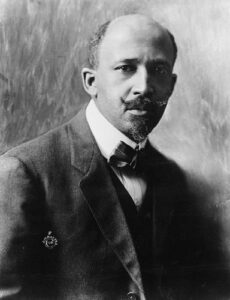
W.E.B. Du Bois was born in Massachusetts in 1868. He attended racially integrated elementary and high schools and went off to Fiske College in Tennessee at age 16 on a scholarship. Du Bois completed his formal education at Harvard with a Ph.D. in history.
Du Bois briefly taught at a college in Ohio before he became the director of a major study on the social conditions of blacks in Philadelphia. He concluded from his research that white discrimination was the main reason that kept African Americans from good-paying jobs.
In 1895, black educator Booker T. Washington delivered his famous “Atlanta Address” in which he accepted segregation but wanted African Americans to be part of the South’s economy. Two years later, Du Bois wrote, “We want to be Americans, full-fledged Americans, with all the rights of American citizens.” He envisioned the creation of an elite group of educated black leaders, “The Talented Tenth,” who would lead African Americans in securing equal rights and higher economic standards.
Du Bois attacked Washington’s acceptance of racial segregation, arguing that this only encouraged whites to deny African Americans the right to vote and to undermine black pride and progress. Du Bois also criticized Washington’s approach at the Tuskegee Institute, a school for blacks that Washington founded, as an attempt “to educate black boys and girls simply as servants and underlings.”
Lynchings and riots against blacks led to the formation in 1909 of the National Association for the Advancement of Colored People (NAACP), an organization with a mainly black membership. Except for Du Bois who became the editor of the organization’s journal, The Crisis, the founding board of directors consisted of white civil rights leaders.
The NAACP used publicity, protests, lawsuits, and the editorial pages of The Crisis to attack racial segregation, discrimination, and the lynching of blacks. Booker T. Washington rejected this confrontational approach, but by the time of his death in 1915 his Tuskegee vision had lost influence among many African Americans.
By World War I, Du Bois had become the leading black figure in the United States. But he became disillusioned after the war when white Americans continued to deny black Americans equal political and civil rights. During the Great Depression of the 1930s, Du Bois increasingly advocated socialist solutions to the nation’s economic problems. He also questioned the NAACP’s goal of a racially integrated society. This led to his resignation as editor of The Crisis in 1934.
Du Bois grew increasingly critical of U. S. capitalism and foreign policy. He praised the accomplishments of communism in the Soviet Union. In 1961, he joined the U.S. Communist Party. Shortly afterward, he left the county, renounced his American citizenship, and became a citizen of Ghana in Africa. He died there at age 95 in 1963.
Du Bois never took part in the Civil Rights Movement of the 1950s and 60s, which secured many of the rights that he had fought for during his lifetime.
For Further Reading
Wolters, Raymond. Du Bois and His Rivals. Columbia, Mo.: University of Missouri Press, 2003.
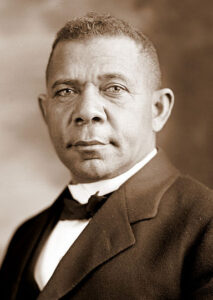
Booker T. Washington was born a slave in Virginia in 1856. Early on in his life, he developed a thirst for reading and learning. After attending an elementary school for African American children, Washington walked 500 miles to enroll in Hampton Institute, one of the few black high schools in the South.
Following his graduation from Hampton, for a few years Washington taught elementary school in his hometown. In 1880, General Armstrong invited him to return to teach at Hampton. A year later, Armstrong nominated Washington to head a new school in Tuskegee, Alabama, for the training of black teachers, farmers, and skilled workers.
Washington designed, developed, and guided the Tuskegee Institute. It became a powerhouse of African American education and political influence in the United States. He used the Hampton Institute, with its emphasis on agricultural and industrial training, as his model.
Washington argued that African Americans must concentrate on educating themselves, learning useful trades, and investing in their own businesses. Hard work, economic progress, and merit, he believed, would prove to whites the value of blacks to the American economy.
Washington believed that his vision for black people would eventually lead to equal political and civil rights. In the meantime, he advised blacks to put aside immediate demands for voting and ending racial segregation.
In his famous address to the 1895 Cotton States and International Exposition in Atlanta, Georgia, Washington accepted the reality of racial segregation. He insisted, however, that African Americans be included in the economic progress of the South.
Washington declared to an all-white audience, “In all things social we can be as separate as the fingers, yet one as the hand in all things essential to mutual progress.” Washington went on to express his confidence that, “No race that has anything to contribute to the markets of the world is long in any degree ostracized.”
White Americans viewed Washington’s vision as the key to racial peace in the nation. With the aid of white philanthropists such as Andrew Carnegie, Washington’s Tuskegee Institute and its philosophy of economics first and equal rights later thrived.
Recognized by whites as the spokesman for his people, Washington soon became the most powerful black leader in the United States. He had a say in political appointments and which African-American colleges and charities would get funding from white philanthropists. He controlled a number of newspapers that attacked anyone who questioned his vision.
Washington considered himself a bridge between the races. But other black leaders criticized him for tolerating racial segregation at a time of increasing anti-black violence and discrimination.
Washington did publicly speak out against the evils of segregation, lynching, and discrimination in voting. He also secretly participated in lawsuits involving voter registration tests, exclusion of blacks from juries, and unequal railroad facilities.
By the time Booker T. Washington died in 1915, segregation laws and racial discrimination were firmly established throughout the South and in many other parts of the United States. This persistent racism blocked the advancement of African Americans.
For Further Reading
Smock, Raymond. Booker T. Washington in Perspective: Essays of Louis R. Harlan. Jackson, Miss.: University Press of Mississippi, 2006.
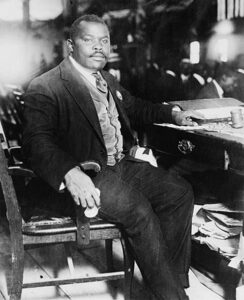
Marcus Garvey was born in Jamaica in 1887. He founded his Universal Negro Improvement Association (UNIA) in 1914.
UNIA stressed racial pride and self-improvement, much like the views of educator Booker T. Washington, whom Garvey admired. Garvey, however, had greater international ambitions, including the development of worldwide black-owned industries and shipping lines. He also called for the end of white colonial rule in Africa.
At the invitation of Washington, Garvey traveled to the United States in 1916. He soon established his UNIA in New York City, opened a restaurant, and started a newspaper. In 1919, he formed the Black Star Line, the first black-owned shipping company in the United States.
The publicity over the Black Star Line caused great excitement among black Americans, many of whom bought stock in it. Garvey organized huge parades to promote this and other UNIA projects. He often appeared in a colorful uniform, wearing a plumed hat.
In 1920, more than 20,000 people attended Garvey’s first UNIA convention in New York. The convention produced a Declaration of Negro Rights, which denounced lynchings, segregated public transportation, job discrimination, and inferior black public schools. The document also demanded “Africa for the Africans.” Without actually consulting any African people, the convention proclaimed Garvey the “Provisional President of Africa.”
Garvey believed that white society would never accept black Americans as equals. Therefore, he called for the separate self-development of African Americans within the United States.
The UNIA set up many small black-owned businesses such as restaurants, groceries, a publishing house, and even a toy company that made black dolls. Garvey’s goal was to create a separate economy and society run for and by African Americans.
Ultimately, Garvey argued, all black people in the world should return to their homeland in Africa, which should be free of white colonial rule. Garvey had grand plans for settling black Americans in Liberia, the only country in Africa governed by Africans. But, Garvey’s UNIA lacked the necessary funds and few blacks in the United States indicated any interest in going “back to Africa.”
A poor economy and the near-bankruptcy of the Black Star Line caused Garvey to seek more dues-paying members for the UNIA. He launched a recruitment campaign in the South, which he had ignored because of strong white resistance.
In a bizarre twist, Garvey met with a leader of the Ku Klux Klan in Atlanta in 1922. Garvey declared that the goal of the UNIA and KKK was the same: completely separate black and white societies. Garvey even praised racial segregation laws, explaining that they were good for building black businesses. Little came of this recruitment effort. Criticism from his followers grew.
In 1922, the U.S. government arrested Garvey for mail fraud for his attempts to sell more stock in the failing Black Star Line. At his trial, the evidence showed that Garvey was a poor businessman, but the facts were less clear about outright fraud. The jury convicted him anyway, and he was sentenced to prison.
In 1927, President Calvin Coolidge commuted his sentence, and he was released. The government immediately deported him to Jamaica.
His vision for black separatism and “back to Africa” never caught on with most African Americans, and he and his spectacular movement soon faded away. Garvey died in 1940, an almost forgotten man.
For Further Reading
Stein, Judith. The World of Marcus Garvey: Race and Class in Modern Society. Baton Rouge, La.: Louisiana State University Press, 1991.
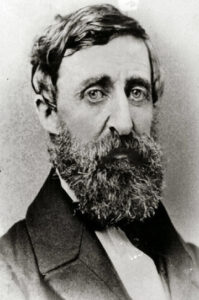
Henry David Thoreau, the son of a Concord pencil-maker, graduated from Harvard in 1837. He worked a short while as a schoolmaster, but then began writing poetry. He soon joined a religious, philosophical, and literary movement called Transcendentalism. The leader of the movement was Ralph Waldo Emerson, a writer and lecturer.
At first, Thoreau agreed with Emerson’s teaching that social reform begins with the individual. In 1845, he built a hut at Walden Pond on property owned by Emerson. For the next few years, Thoreau lived simply off the land, meditated, and wrote about nature.
In 1846, the United States declared war against Mexico. Thoreau and other Northern critics of the war viewed it as a plot by Southerners to expand slavery into the Southwest. Thoreau had already stopped paying his taxes in protest against slavery. The local tax collector had ignored his tax evasion, but decided to act when Thoreau publicly condemned the U.S. invasion and occupation of Mexico.
In July 1846, the sheriff arrested and jailed Thoreau for his tax delinquency. Someone, probably a relative, anonymously paid Thoreau’s taxes after he had spent one night in jail. This incident prompted Thoreau to write his famous essay, “Civil Disobedience” (originally published in 1849 as “Resistance to Civil Government”).
Thoreau’s minor act of defiance caused him to conclude that it was not enough to be simply against slavery and the war. A person of conscience had to act. In “Civil Disobedience,” he proclaimed an activist manifesto:
In other words, when a sixth of the population of a nation, which has undertaken to be the refuge of liberty, are slaves, and a whole country [Mexico] is unjustly overrun and conquered by a foreign army, and subjected to military law, I think that it is not too soon for honest men to rebel and revolutionize.
Thoreau argued that the government must end its unjust actions to earn the right to collect taxes from its citizens. As long as the government commits unjust actions, he continued, conscientious individuals must choose whether to pay their taxes or to refuse to pay them and defy the government.
Thoreau declared that if the government required people to participate in injustice by obeying “unjust laws,” then people should “break the laws” even if they ended up in prison. “Under a government which imprisons any unjustly,” he asserted, “the true place for a just man is also a prison.”
By not paying his taxes, Thoreau explained, he was refusing his allegiance to the government. “In fact,” he wrote, “I quietly declare war with the State….”
Unlike some later advocates of civil disobedience like Martin Luther King, Thoreau did not rule out using violence against an unjust government. In 1859, Thoreau defended John Brown’s bloody attack on the federal arsenal at Harper’s Ferry, Virginia, during his failed attempt to spark a slave revolt.
For Further Reading
Thoreau, Henry D. The Portable Thoreau. New York: Penguin Books. 1964.
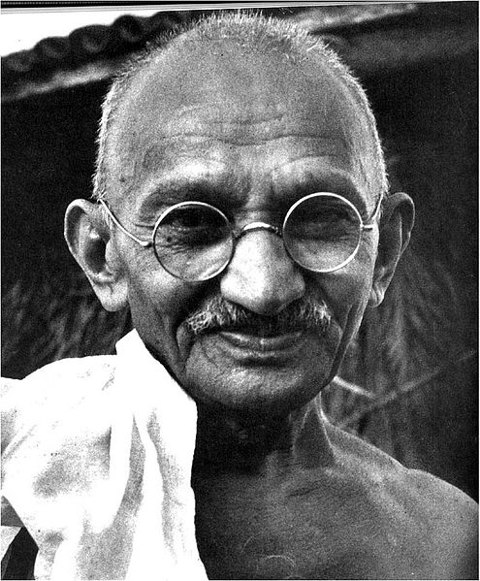
Mohandas K. Gandhi, often referred to as Mahatma, the Great Soul, was born into a Hindu merchant family in 1869. He was heavily influenced by the Hinduism and Jainism of his devoutly religious mother. She impressed on him beliefs in non-violence, vegetarianism, fasting for purification, and respect for all religions.
In 1888, Gandhi sailed to England and studied to become a lawyer. His first job for an Indian company required that he move to South Africa. The ruling white Boers (descendants of Dutch settlers) discriminated against all people of color. When railroad officials made Gandhi sit in a third-class coach even though he had purchased a first-class ticket, Gandhi refused and police forced him off the train.
This event changed his life. Gandhi became an outspoken critic of South Africa’s discrimination policies. When the Boer legislature passed a law requiring that all Indians register with the police and be fingerprinted, Gandhi, along with many other Indians, refused to obey the law. He was arrested and put in jail, the first of many times he would be imprisoned for disobeying what he believed to be unjust laws.
While in jail, Gandhi read the essay “Civil Disobedience” by Henry David Thoreau, a 19th-century American writer. Gandhi adopted the term “civil disobedience” to describe his strategy of non-violently refusing to cooperate with injustice, but he preferred the Sanskrit word satyagraha (devotion to truth). Following his release, he continued to protest the registration law by supporting labor strikes and organizing a massive non-violent march. Finally, the Boer government agreed to end the most objectionable parts of the registration law.
After 20 years in South Africa, Gandhi went home to India in 1914. When Gandhi returned, he was already a hero. Gandhi devoted the rest of his life struggling against what he considered three great evils afflicting India. One was British rule, which Gandhi believed impoverished the Indian people. The second evil was Hindu-Muslim disunity caused by years of religious hatred. The last evil was the Hindu tradition of classifying millions of Indians as a caste of “untouchables.” Untouchables, those Indians born into the lowest social class, faced severe discrimination.
Gandhi expected Britain to grant India independence after World War I. When it did not happen, Gandhi called for strikes and other acts of peaceful civil disobedience. The British sometimes struck back with violence, but Gandhi insisted Indians remain non-violent. Many answered Gandhi’s call. But as the movement spread, Indians started rioting in some places. Gandhi called for order and canceled protests. He drew heavy criticism from fellow nationalists, but Gandhi would only lead a non-violent movement.
Gandhi was jailed many times. At one trial he said, “In my humble opinion, non-cooperation with evil is as much a duty as is cooperation with good.” When he was released, he continued leading non-violent protests.
When India finally gained independence, the problem became how Hindus and Muslims would share power. Distrust spilled over into violence. Gandhi spoke out for peace and forgiveness. He opposed dividing the country into Hindu and Muslim nations, believing in one unified India. In May 1947, British, Hindu, and Muslim political leaders, but not Gandhi, reached an agreement for independence that created a Hindu-dominated India and a Muslim Pakistan. As Independence Day (August 15, 1947) approached, an explosion of Hindu and Muslim looting, rape, and murder erupted throughout the land. Millions of Hindus and Muslims fled their homes, crossing the borders into India or Pakistan.
Gandhi announced that he would fast until “a reunion of hearts of all communities” had been achieved. An old man, he weakened rapidly, but he did not break his fast until Hindu and Muslim leaders came to him pledging peace. Days later, an assassin shot and killed Gandhi. The assassin was a Hindu who believed Gandhi had sold out to the Muslims.
Gandhi and others like Martin Luther King Jr. confronted injustice with non-violent methods. “It is the acid test of non-violence,” Gandhi once said, “that in a non-violent conflict there is no rancor left behind and, in the end, the enemies are converted into friends.”
For Further Reading
Gandhi, Mohandas Karamchand (Mahatma). Gandhi, An Autobiography: The Story of My Experiments with Truth. Massachusetts: Beacon Press. 1957.
Chicano activist Cesar Chavez was one of America’s best known labor leaders. Born in Arizona in 1927, Chavez was one of six children. His family moved in California during the Great Depression, and everyone worked as farm workers, traveling from farm to farm throughout California, cultivating and harvesting crops.
In 1948, Chavez married another farm worker and began a family. By the end of the 1950s, Chavez and his wife had eight children.
He continued as a farm worker, but decided to try to organize the workers into a union to get better conditions and wages. Neither California nor federal labor laws protected farm workers. Farm workers’ mobility, their temporary employment, and their desperate economic circumstances made migrant workers difficult to organize.
In 1965, grape pickers earned an average of 90 cents an hour. Many workers, including children, labored long hours, risked injury from unsafe machinery, and suffered abusive treatment from supervisors and employers. They also endured substandard housing that lacked indoor plumbing, cooking facilities, or personal privacy.
One organization responding to farm workers’ problems was the Agricultural Workers Organizing Committee (AWOC), founded by Dolores Huerta, who had a long record of labor activism and commitment to human rights.
In 1962, Chavez invited Huerta to work with him in creating a new farm workers’ union. According to Huerta, “Cesar … knew that it wasn’t going to work unless people owned the union … [and] that the only way … [was] to organize the union ourselves.” Traveling throughout California, Chavez tirelessly met with farm workers any place he could find them — in the fields, at their homes, and in the migrant camps. His mission was to persuade them that forming a union would improve their lives.
In 1965, strikes by Filipino workers against major grape growers broke out in California’s Central Valley. “All I knew was, they [the Filipinos] wanted to strike….” Chavez explained. “We couldn’t work while others were striking.” Chavez’s union, the National Farm Workers Association (NFWA), joined the strike in solidarity with the Filipino workers.
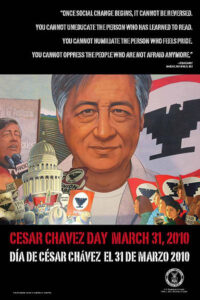
Six months later, the grape strike had grown, generating national press coverage. Thousands of striking farm workers formed picket lines around the vast vineyards near Delano, California. Many growers responded fiercely, employing strikebreakers and occasionally using violence against the picketers. Despite Chavez’s call for non-violence, some strikers resorted to violence as well. Local police often harassed the union, arresting strikers on questionable charges often dismissed in court.
Inspired by the tactics and outcome of the Montgomery bus boycott, Chavez announced a consumers’ boycott of non-union grapes. The grape boycott became the core of the farm workers’ non-violent strategy. The grape strikers sustained their boycott by linking it to the larger civil rights movement, which many Americans supported.
Chicano leaders organized marches and rallies in support of the farm workers’ cause. The farm workers found allies among other unions, church groups, students, consumers, and civil rights organizations that publicized the grape boycott nationwide. Millions of consumers stopped buying grapes, creating substantial economic pressure on the large grape growers.
By 1966, some large growers conceded, recognizing the new farm workers’ union. On August 22, 1966, the AWOC and the NWFA merged to form the United Farm Workers (UFW). The new union became the largest, most influential organization in the Chicano struggle for equality and social justice.
Many growers stubbornly refused to recognize the right of the UFW to unionize their farms. The boycott and strike continued for five years. Chavez, following the example of India’s non-violent leader Mahatma Gandhi, added personal hunger strikes to the UFW’s arsenal of protest strategies. Repeated fasts, often lasting for several weeks, damaged Chavez’ health, contributing to his death in 1993. But Chavez’s fasts also generated great respect for his commitment to non-violent social change. By 1970, two-thirds of all grapes grown in the Central Valley came from unionized workers. In 1975, Chavez’s efforts helped pass the nation’s first farm labor act in California. It legalized collective bargaining and banned owners from firing striking workers.
For Further Reading
Levy, Jacqueline M. & Fred Ross Jr. Cesar Chavez: Autobiography of La Causa. Minnesota: University of Minnesota Press. 2007.
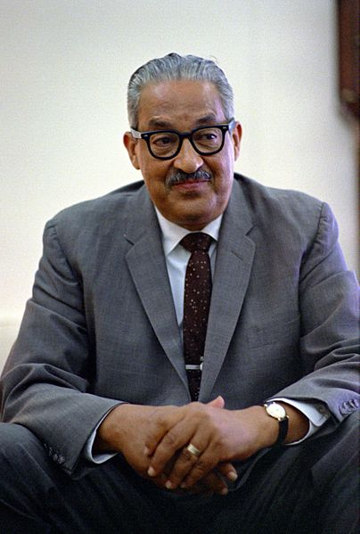
Few blacks born in 1908 could aspire to a career as a lawyer, much less as a member of the U.S. Supreme Court. Great grandson of a slave and son of a Pullman steward, Thurgood Marshall became a dramatic exception to the modest expectations of black Americans in the early part of the 20th century. He was born in Baltimore and attended segregated schools as a boy. After graduating from the historically black Howard University Law School, he began practicing law in 1933. In 1938, he became chief counsel of the Legal Defense Fund of the National Association for the Advancement of Colored People.
This role would soon propel him to national prominence. The NAACP Legal Defense Fund was the key legal arm of the broader struggle for justice and civil rights. By 1950, Marshall and his legal colleagues moved into high gear on a sustained attack on segregated education at all levels. Marshall began this crusade by winning important legal victories in the Supreme Court. His efforts eliminated practices in state universities and professional schools that failed to provide equal education for African American applicants.
The biggest challenge lay ahead. Working with clients in the segregated South, Marshall was ready to attack the longstanding “separate but equal” doctrine in public schools. His struggles were both legal and political. He even faced powerful internal resistance in his own organization. Many civil rights activists believed that it was premature to take on the entire system of segregated public schools. Fearing that the Supreme Court would succumb to widespread public resistance to school integration, they urged caution. Determined to proceed, Marshall carried the day.
He and his staff of lawyers worked furiously to make the most effective case. In 1952, he presented the legal argument that eventually resulted in the landmark decision of Brown v. Board of Education in 1954. Marshall departed from traditional legal strategy by presenting the Supreme Court with persuasive evidence from the fields of psychology and social science about the effects of segregation on school children. Still, his basic argument was that no reading of the Constitution could support segregation. This victory for African American children in the courts made Marshall a civil rights hero as well as a national figure.
In 1961, President John F. Kennedy appointed him to the U.S. Court of Appeals. In 1965, President Lyndon Johnson made him Solicitor General. Two years later, Johnson appointed Marshall to the Supreme Court, where he became the first black to occupy the position of Associate Justice. For more than 20 years, Associate Justice Thurgood Marshall voted to expand the Bill of Rights by favoring greater free expression, more restrictions on police misconduct, and increased opportunities for racial minorities, welfare recipients, and other marginal groups in American society. A long illness prompted him to retire in 1991. When asked to sum up his role as a lawyer and justice, Marshall said, “He did what he could with what he had.” For those who suffered from segregation or who had little power, no one did more.
For Further Reading
Williams, Juan. Thurgood Marshall: American Revolutionary. New York: Three Rivers Press. 1998.